


By Dr Daniel
Hair loss can appear as a receding hairline, a widening parting, increased shedding or bald patches. It affects both men and women, and the right treatment depends on the cause.
Many types of hair loss can be managed, but not every treatment suits every condition. A scalp assessment helps distinguish genetic thinning from temporary shedding, infection, inflammation or hair-pulling habits before a treatment plan is recommended.
Key Takeaways
- Different causes of hair loss require different treatments.
- A medical assessment may include scalp examination, dermoscopy and selected tests.
- Medicines, treatment of scalp disease and correction of nutritional deficiencies may be part of management.
- Procedures such as PRP, laser and other adjunctive treatments are considered according to suitability and the available evidence.
- Early assessment is particularly important for sudden patches, scalp pain, inflammation or signs of scarring.
What Causes Hair Loss?
Hair loss may result from genetics, immune activity, illness, nutritional deficiencies, infections, scalp inflammation or repeated tension on the hair. More than one factor can be present at the same time.
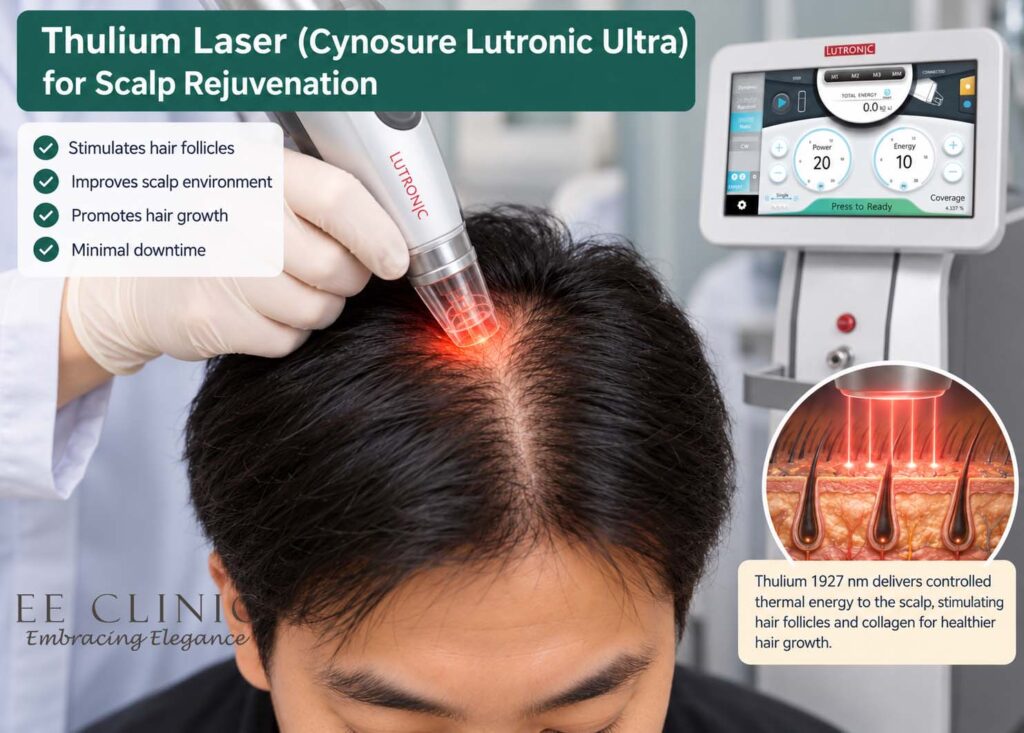
Illustrative examples of hair-loss patterns. Appearance alone does not confirm the diagnosis.
1. Genetic Hair Loss: Androgenetic Alopecia
Genetic hair loss is a common cause of gradual thinning. In men, it often affects the hairline and crown. In women, a widening central parting and reduced density over the top of the scalp are common patterns.
What may help: treatments such as topical minoxidil and, for suitable patients, other prescription medicines. Selected procedures may be considered alongside medical treatment. The aim is usually to slow progression and improve or maintain density, rather than promise complete regrowth.
2. Alopecia Areata
Alopecia areata is an autoimmune condition in which the immune system attacks hair follicles. It often causes smooth, round or oval patches of hair loss and can also affect the eyebrows, eyelashes or other areas.
What may help: intralesional corticosteroid injections may be used for selected patients with limited patches. These are small injections into affected skin, rather than RF microneedling. Regrowth can take several weeks to months, and the response varies. More extensive disease may need a different treatment approach.
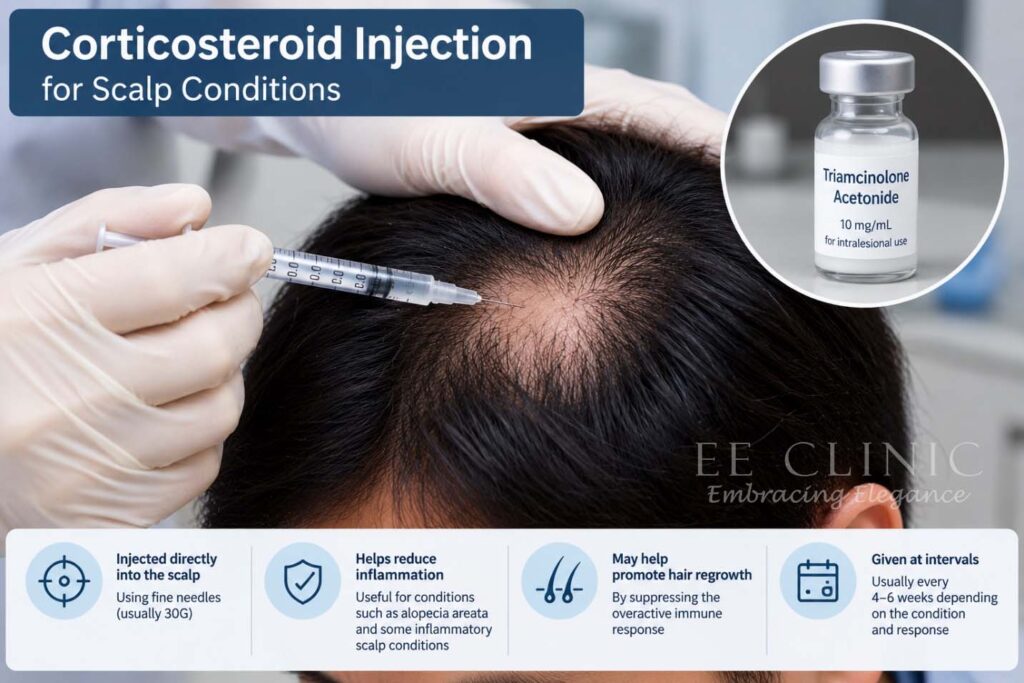
Illustration only. The medicine, concentration and treatment schedule depend on the diagnosis and medical assessment.
3. Hair Pulling: Trichotillomania
Trichotillomania involves repeated hair pulling that may happen consciously or automatically. It can occur during stress, boredom or concentration, and may leave irregular patches with broken hairs of different lengths.
What may help: cognitive behavioural therapy, particularly habit reversal training, can help a person recognise triggers and practise alternative responses. Support from a suitably trained mental health professional may be needed; treatment should address the pulling behaviour as well as the hair loss.
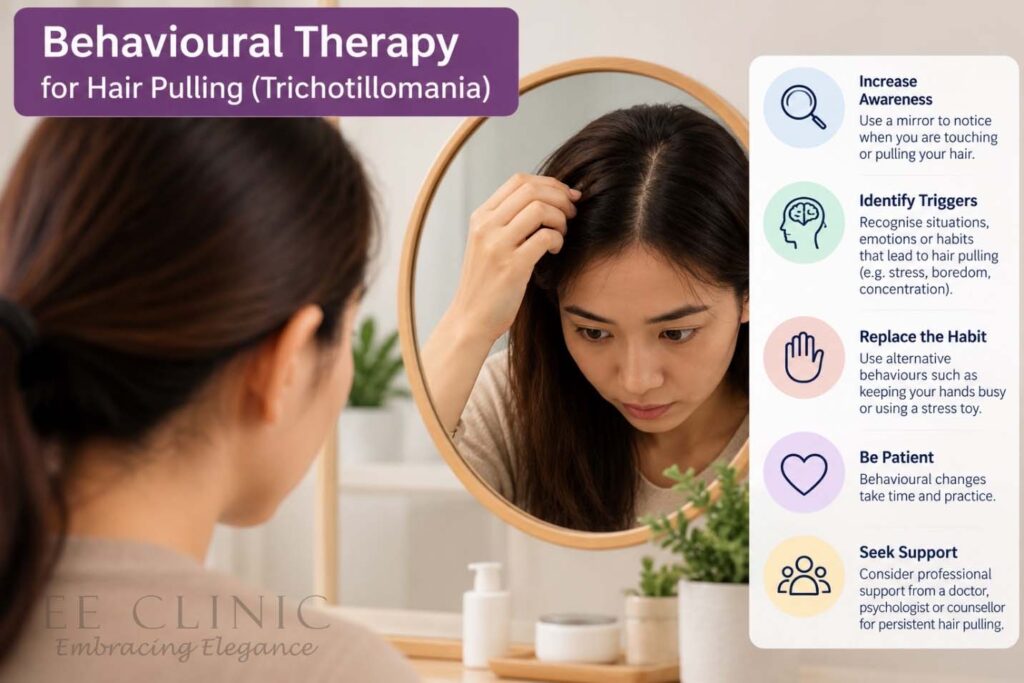
Behavioural support can help address hair-pulling habits. The illustration does not show a patient outcome.
4. Fungal Scalp Infections
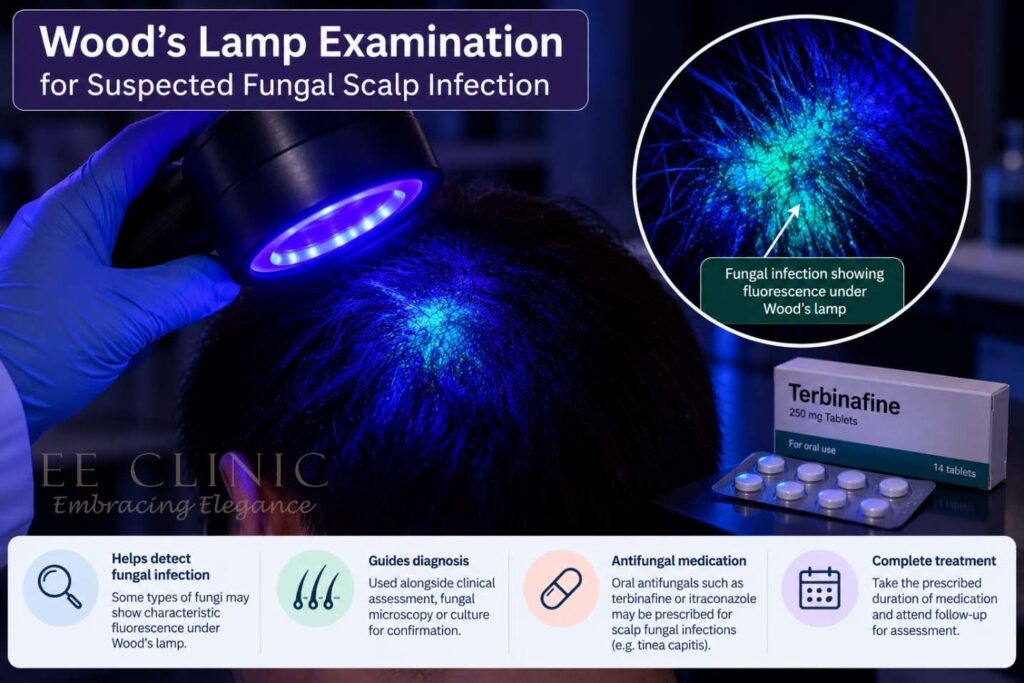
Only some fungi fluoresce under a Wood’s lamp. The medicine shown is illustrative; treatment depends on the organism and individual circumstances.
Tinea capitis is a fungal infection of the scalp and hair shafts. It may cause scaling, itching, broken hairs and patches of hair loss. A severely inflamed infection can cause scarring if treatment is delayed.
What may help: scalp examination and, where appropriate, laboratory testing of hairs or scale. A Wood’s lamp can help identify certain fungal infections, but many do not fluoresce, so a negative examination does not rule out infection. Tinea capitis generally requires oral antifungal medicine; shampoo alone is insufficient.
5. Scalp Inflammation and Dandruff
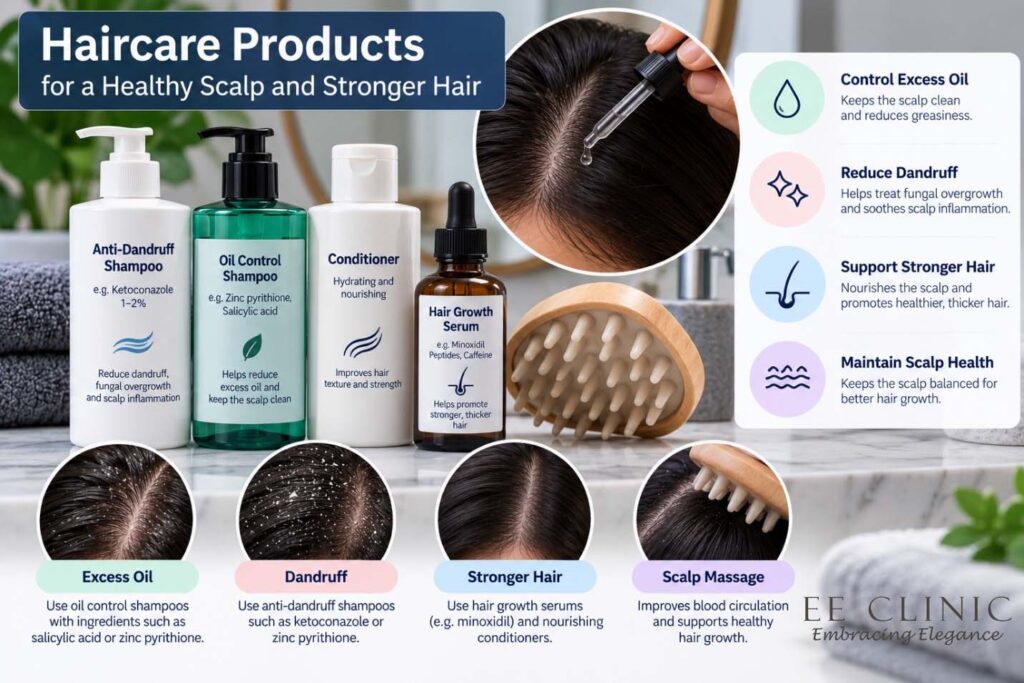
Dandruff and seborrhoeic dermatitis may cause itching, flaking and redness. Scratching and inflammation can contribute to breakage or increased shedding, although ordinary dandruff does not usually permanently destroy hair follicles.
What may help: appropriate cleansing, medicated anti-dandruff shampoo and treatment of inflammation. Persistent hair loss, pain or marked redness should be assessed rather than managed with hair-care products alone.
6. Other Causes of Shedding and Thinning
- Illness, stress or surgery: these can trigger temporary shedding, often appearing a few months after the event.
- Nutritional deficiencies: inadequate protein, iron or other nutrients can contribute.
- Hormonal changes: postpartum changes and thyroid disorders may affect hair growth.
- Medicines: some can cause shedding. Discuss concerns with your prescriber before making changes.
- Traction: repeated tension from tight hairstyles or extensions can damage follicles.
How Is Hair Loss Assessed?
Your doctor will ask when the problem began, how it has changed, whether there are scalp symptoms, and about your health, medicines, diet, family history and hair-care habits.
A dermoscope or trichoscope magnifies the scalp and hair shafts. Findings such as exclamation-mark hairs, black dots, broken hairs, scaling or changes in follicular openings can help guide diagnosis. These signs must be interpreted together; no single feature explains every case.
Depending on the findings, blood tests, fungal tests or a scalp biopsy may be appropriate. These are selected according to the suspected cause rather than required for everyone.
Hair-Loss Procedures Discussed at EE Clinic
EE Clinic offers a range of hair and scalp treatment options. The procedures below may be discussed for suitable patients, particularly those with pattern hair loss. They are not interchangeable treatments for infection, alopecia areata or hair-pulling disorders.
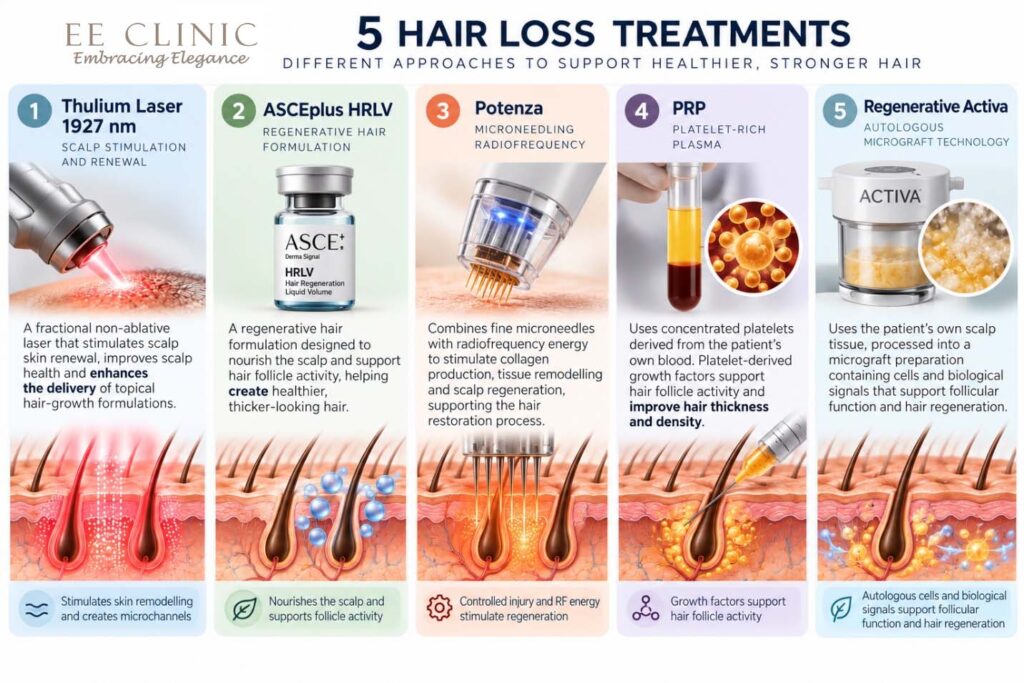
1. Lutronic Ultra 1927 nm Thulium Laser
Lutronic Ultra is a fractional non-ablative thulium laser. Small studies have investigated 1927 nm laser treatment for pattern hair loss, including its use to assist delivery of selected topical formulations. It may be considered as an adjunct; it should not be described as a guaranteed hair-regrowth laser.
2. ASCEplus HRLV
ASCEplus HRLV is a topical formulation used in some scalp-treatment protocols. Evidence for regenerative and exosome-based hair treatments is still developing, and findings for one product or protocol cannot automatically be applied to another. Your doctor should explain the formulation, intended application and limits of the supporting evidence.
3. Potenza RF Microneedling
Potenza combines microneedles with radiofrequency energy. Research into RF microneedling for pattern hair loss is emerging, often involving combination treatments. It should not be presented as an established standalone cure. Potential risks include discomfort, redness, infection, burns or scarring, depending on how treatment is delivered.
4. Platelet-Rich Plasma: PRP
PRP uses a concentrated platelet preparation from the patient’s own blood, injected into the scalp. It may help some patients with pattern hair loss, but protocols and responses vary. A course of treatment and maintenance may be discussed.
5. Regenera Activa Autologous Micrografts
Regenera Activa uses small scalp-tissue samples processed into an autologous micrograft preparation. It differs from a conventional hair transplant, which relocates individual follicular units. Published studies suggest potential benefits in selected patients, but larger studies and longer follow-up are needed to clarify outcomes.
Choosing a procedure: your diagnosis, existing follicles, degree of thinning, medical history, expected benefit, risks and ongoing treatment needs should guide the decision.
Hair Nutrition, Supplements and Minoxidil
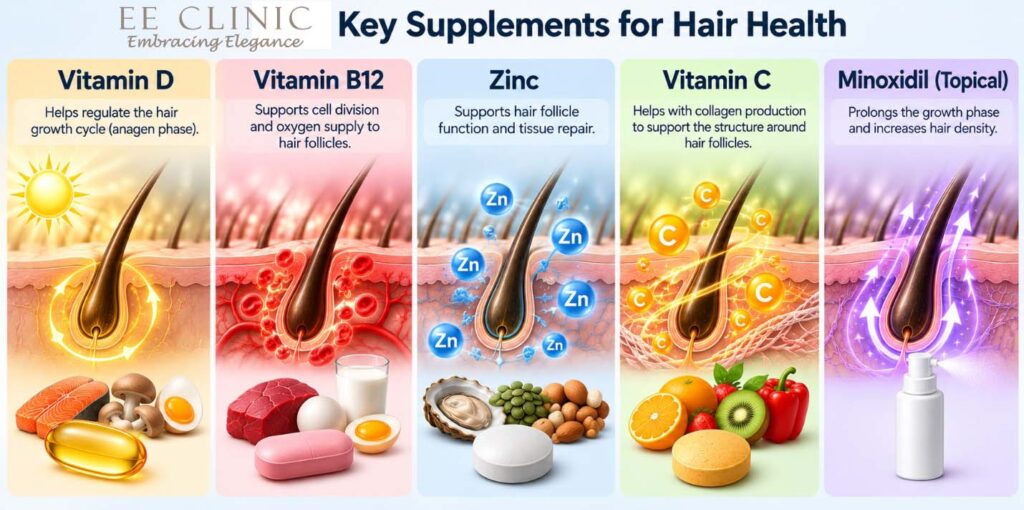
Nutrition and medical treatment have different roles. Supplements do not replace a diagnosis or appropriate treatment.
A balanced diet with adequate protein supports normal hair health. Nutrients such as iron, vitamin D, vitamin B12 and zinc may need attention when intake is inadequate or a deficiency is suspected. Vitamin C supports collagen formation and iron absorption.
Supplements are most useful when correcting a deficiency. Taking more vitamins does not necessarily produce more hair. Your doctor can advise whether testing or supplementation is appropriate.
Minoxidil is a medicine, not a nutritional supplement. Topical minoxidil can help selected types of pattern hair loss by supporting the hair-growth cycle. Consistent use is needed, and results generally take several months. Scalp irritation and initial increased shedding can occur. Ask a doctor or pharmacist about suitability, particularly during pregnancy or breastfeeding.
When Should You Seek Medical Advice?
Arrange an assessment for persistent thinning, a widening parting or excessive shedding. Seek prompt care for sudden bald patches, scalp pain, pus, marked redness, swelling or shiny areas with loss of follicular openings, as these can indicate conditions that need specific treatment.
Frequently Asked Questions
Can hair loss be reversed?
Some causes improve after the trigger or underlying condition is treated. Genetic hair loss usually requires ongoing management. Regrowth is less likely where follicles have been permanently scarred, which makes timely diagnosis important.
How long does treatment take to work?
Hair grows slowly, so meaningful changes are usually assessed over months rather than days. The timeframe depends on the diagnosis and treatment. Follow-up photographs and scalp assessment can help monitor progress.
Will shampoo or supplements alone solve hair loss?
They may help when scalp disease or a deficiency contributes, but they do not treat every cause. Pattern hair loss, autoimmune conditions and fungal infections require different approaches.
Start by Understanding the Cause
Effective management starts with identifying why the hair is thinning. A personalised plan may combine treatment of the underlying condition, suitable medicines, scalp care and selected procedures, with realistic expectations about the results.
Concerned About Hair Thinning or Excessive Shedding?
Arrange a consultation at EE Clinic to have your scalp and hair assessed and discuss the options suitable for you.